Affordable Food Access
Stretch your food budget with government programs, farmers markets, foraging, fishing, hunting, and seed libraries — all at low or no cost.
| Option | Description | Typical Savings | Access |
|---|---|---|---|
| Best-Value Grocery Stores | Chains with consistent low prices and weekly specials. | 5–15% vs. avg. | Open to all shoppers |
| Farmers Markets | Local seasonal produce direct from growers. | Varies by season | SNAP/WIC accepted at many markets |
| Bulk Buying Clubs & Co-ops | Member-based wholesale pricing and community savings programs. | 10–25% vs. retail | Membership or community participation |
| SNAP/WIC Retailers | Federal food assistance at participating stores. | Program benefits | SNAP/WIC cardholders |
| CSA Farms | Buy shares of local farm harvests; weekly boxes of fresh produce. | Up to 20% vs. store | Seasonal subscription |
| Double Up Food Bucks | SNAP benefit matching at farmers markets — dollar-for-dollar up to $20/visit. | Up to 2× SNAP value | SNAP cardholders at participating markets |
| Foraging | Wild edibles from parks, trails, and public land in season. | Free | Open to all — know your plants |
| Fishing | Fresh protein at the cost of a license and your time. | Near-free protein | State fishing license required |
| Community Garden Plot | Grow your own food in a shared space with tools and soil provided. | $0–$50 / season | Apply through parks dept. or 211 |
Top 10 Best-Value Grocery Stores & Bulk Buying Clubs
Ranked lists by region — coming soon. These will include national chains, regional discounters, and bulk clubs with the best per-unit value for common staple foods.
Federal Nutrition Assistance (Pathway 2)
These programs serve tens of millions of Americans. If you or anyone in your household qualifies, these are your highest-leverage resources for reducing food costs.
Supplemental Nutrition Assistance Program
Monthly EBT card benefits for groceries. The largest US food assistance program — serving 42+ million people. Apply online through your state agency.
Apply for SNAP → (opens in new tab)Women, Infants & Children
Monthly food benefits plus nutrition counseling for pregnant women, new mothers, infants, and children under 5. Also includes breastfeeding support.
Learn about WIC → (opens in new tab)National School Lunch & Breakfast Program
Free and reduced-price meals for qualifying students. In many districts, all students qualify for free breakfast. Contact your school district to apply.
School meals info → (opens in new tab)Meals on Wheels + Summer Food Service
Summer Food serves children when schools are closed. Meals on Wheels provides free or low-cost home delivery for seniors and people with disabilities.
Summer Food → Meals on Wheels → (opens in new tab)Stretch Your Benefits Further
Double Up Food Bucks
SNAP participants receive dollar-for-dollar matching when purchasing fresh fruits and vegetables at participating farmers markets — up to $20 per visit. Dramatically increases purchasing power for fresh produce.
Find a participating market →Farmers Market Nutrition Program
WIC and Senior FMNP provide additional coupons for use at local farmers markets — connecting low-income families directly with local growers for fresh, seasonal produce.
Farmers Market Nutrition Program →Find All Benefits — Call 211
Call or text 211 to speak with a benefits navigator who can identify every program you qualify for in your county — including utility, housing, and healthcare in addition to food programs.
211.org →


Seasonal Foraging Calendar
Sample calendar for Midwest Zone 6a. Verify locally before consuming any wild plant. Always forage with an experienced guide until confident in identification.
| Month | What to Forage |
|---|---|
| Jan – Feb | Pine needle tea, stored acorns, maple sap, cattail roots |
| Mar – Apr | Nettles, ramps, fiddleheads, dandelion greens, violet leaves |
| May – Jun | Mulberries, wild strawberries, cherries, lamb’s quarters, purslane |
| Jul – Aug | Blueberries, raspberries, wild plums, blackberries, walnuts forming |
| Sep – Oct | Walnuts, apples, crabapples, elderberries, hickory nuts, rosehips |
| Nov – Dec | Cranberries, Jerusalem artichokes, pine needle tea, stored nuts and roots |

⚠️ Never forage mushrooms without expert guidance — misidentification can be fatal.
Safe Harvesting Rules
- Harvest no more than 10–20% of any single patch
- Avoid roadside, polluted, or chemically treated areas
- Use soil testing kits in unfamiliar urban locations
- Clip greens above ground — leave roots intact
- Never eat anything you cannot positively identify
Apps & References
- Gather app — seasonal foraging alerts by location
- FallingFruit.org — urban food map (opens in new tab)
- The Forager’s Harvest — Samuel Thayer (definitive guide)
Why Forage?
- Free, nutrient-dense food with zero food miles
- Wild plants often have higher phytonutrient density than cultivated varieties
- Cuts grocery costs and builds self-reliance
- Deepens ecological literacy and seasonal awareness
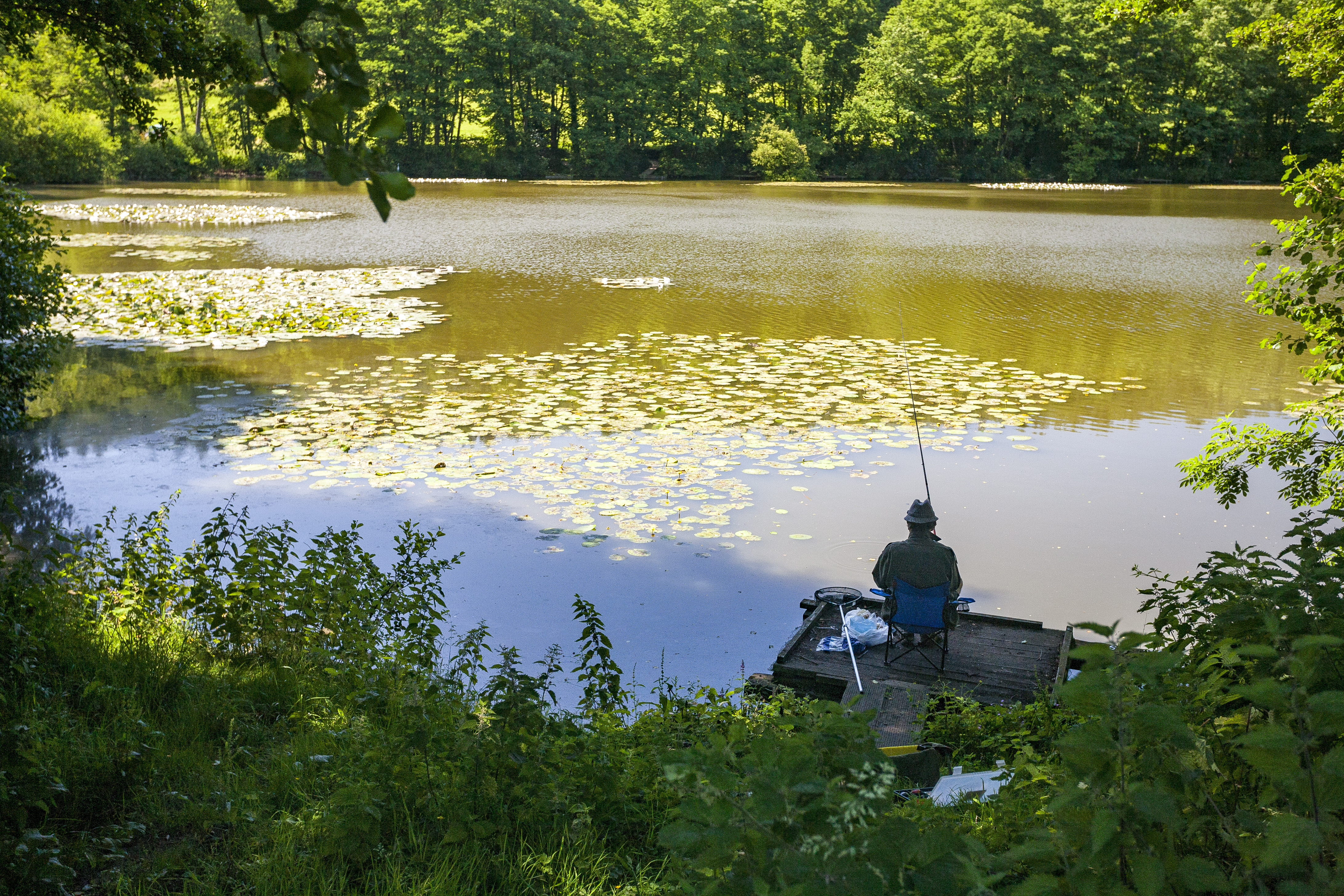
Fishing as Free Food
Catch fish to replace a red meat dish whenever possible. The 80/20 Pareto Principle applies: 80% of catches come from 20% of your efforts, locations, and tackle. Focus on proven depths, structures, and trusted baits. Most fish are caught by a small percentage of skilled anglers — learn from them.
Health Benefits of Fishing
- Low-impact exercise: arms, legs, shoulders, and core balance
- Boosts brain health and reduces cognitive decline risk
- Reduces cortisol, anxiety, and stress
- Excellent family and community activity
- Wild-caught fish: lean, high-protein, rich in Omega-3 EPA+DHA
Get Licensed & Started

Hunting to Eat
Venison and wild game are lean, nutrient-dense protein sources that cost little beyond licensing, time, and effort. Many states offer public land access and free hunter education programs. Surplus harvest can be bartered with neighbors for other goods and services.
Nutritional Value of Wild Game
- Venison: ~26g protein per 3oz, lower saturated fat than beef
- Wild turkey: lean, high protein, no antibiotics or hormones
- Wild fish: high Omega-3 EPA+DHA content
- No feedlot additives, antibiotics, or growth hormones
Getting Started
- Contact your state Fish & Wildlife agency for licensing requirements
- Many states offer reduced licenses for low-income hunters
- Hunter education courses are free in most states
- Learn to field-dress and process your own game
- Barter surplus harvest with neighbors for other goods or services
2,600+ Seed Libraries — US & Canada
Borrow seeds for the season, grow food, and return seeds from your harvest at no cost. Seed libraries are typically in public libraries. Over 2,600 operate across the US and Canada.
Find Your Local Seed Library
- Start with your local public library
- RichmondGrowsSeeds.org — National hub (opens in new tab)
- SeedLibraryNetwork.org — Full directory (opens in new tab)
Why Heirloom Seeds
- Can be saved, shared, and adapted to your local microclimate
- Greater genetic diversity and higher phytonutrient density
- Not subject to hybrid or patent restrictions
- Builds community food sovereignty and generational resilience
- Commercial hybrids must be repurchased every year — heirlooms never